
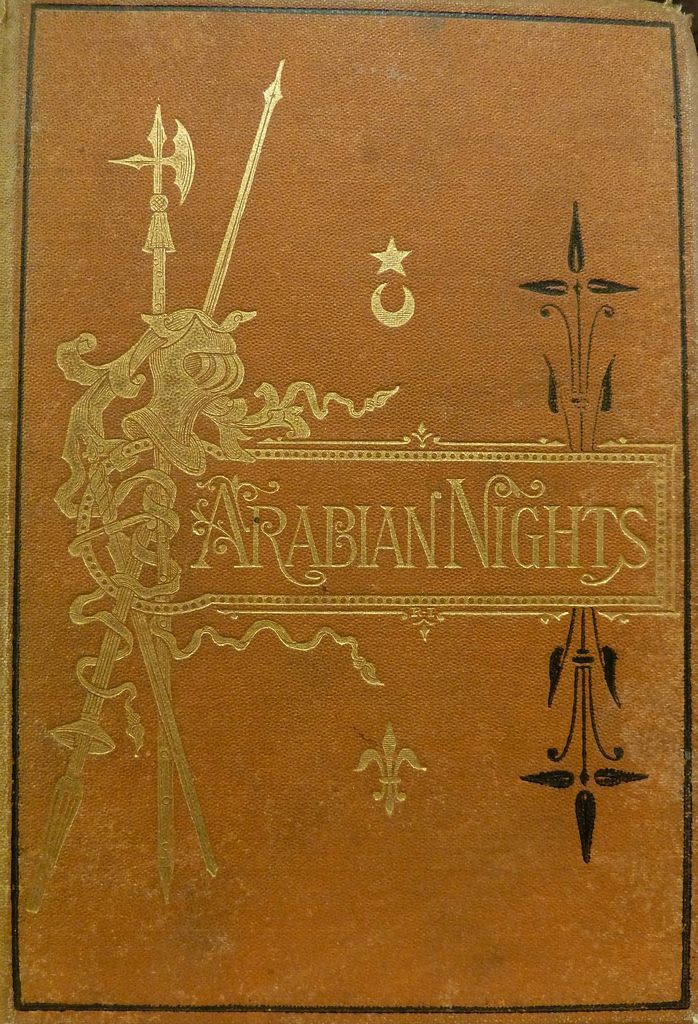
Multiple times in life we have encountered one or more of the stories from this celebrated collection; the exploits of Aladdin and Sindbad the Sailor are perhaps the best known as they have been co-opted by western media and expanded into franchises. But those are but two of the tales of Arabian nights. This is the (nearly) complete compilation as interpreted by Sir Richard Burton at the end of the nineteenth century.
The outermost frame story is also relatively well known. King Shahryar observes, first hand, the infidelity of his brother’s wife, and vows that his own wife would never be unfaithful to him. To this end, he resolves to have every wife of his put to death the morning after his wedding, thereby ensuring that she would never be unfaithful. Scheherazade is the daughter of his Vizier, and she is the next to be married to Shahryar. But that night, she starts telling a story to her sister, which goes on for most of the night, and stops at a cliff-hanger at dawn. Shahryar so desperately wants to know the tale’s ending, that he is persuaded to let her live another day. This continues for another thousand nights.
There are several more frame stories within this, like the Genie who stops a trader and demands a story in exchange for his life, the trader goes on to relate further stories. Another frame story involves a poor porter who is observed bemoaning his ill-luck by Sindbad. Sindbad then tells the stories of his seven voyages and the adventures on each. There are stories involving enchanted princes, castles, and kingdoms. There are stories involving thieves, demons, sorcerers, maidens, merchants, naval voyages, magic caves, vast treasures, and many more.
Many tales are bawdy and saucy, despite the primary translator being from the Victorian era. Several themes are repetitive, and in some cases, the frame stories are so deeply nested that the reader forgets the context of the outer stories before the inner one finishes. There is a reason that only a handful of stories are well known as “Tales from the Arabian Nights”; the majority of them are so far-fetched that they lean into the region of preposterous. It’s fun to read once, but if I called upon to relate a particular story at random, I probably will fall back on the staples: Aladdin, Alibaba and Sindbad.